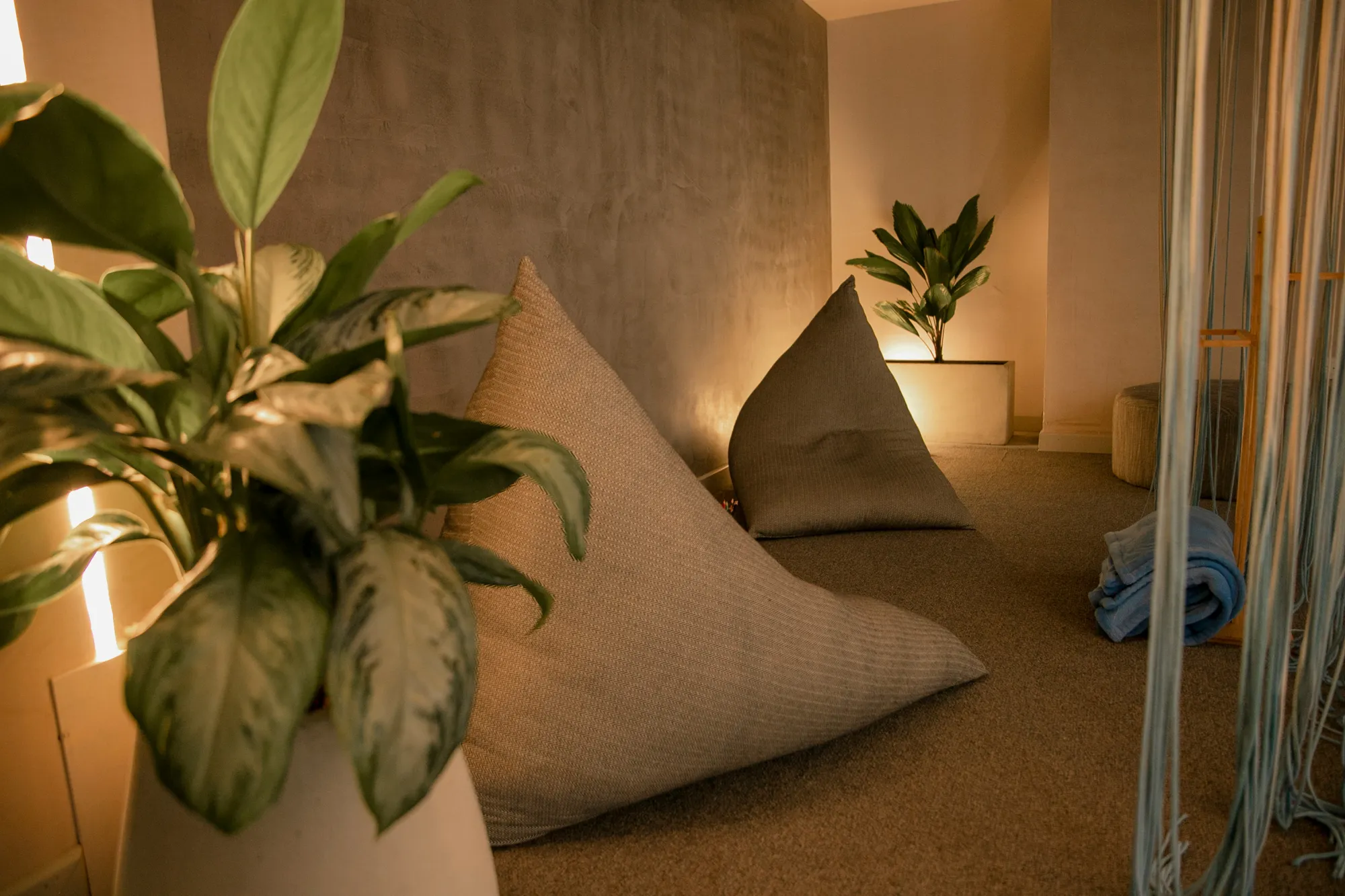
How Loud Should Music Be in a Spa?
Volume is the easiest part of spa music to get wrong. Too loud and clients can't relax. Too quiet and every cough and footstep stands out. Getting it right makes your rooms feel calm without anyone noticing why.
We compose spa music, and we think about loudness as much as melody. Here's how to set the volume in every room.
The short answer
Spa music should be quiet enough that a therapist and client can talk at a soft, normal voice. It should fill the silence without drawing attention. If anyone has to raise their voice, it's too loud.
There's no single right number. Rooms, speakers and clients all differ. A simple listening test works better than a meter.
Why volume matters so much
Music that's too loud keeps people alert. Clients can't drift off, and therapists can't check pressure or comfort without raising their voices.
Music that's too quiet has its own problem. It stops masking the small sounds of a busy spa: doors, voices in the corridor, the hum of a fridge. Those sounds can pull people out of the moment.
A simple test you can do today
- Pick a quiet time. Set the volume before clients arrive.
- Lie where the client lies. Volume sounds very different on the couch than by the door.
- Talk softly. Ask a colleague to speak at the level they'd use mid-treatment. You should hear them easily.
- Listen for the corridor. If outside noise still stands out, nudge the music up a little.
- Mark the setting. Note the volume level for each room, so every therapist uses the same one.
Repeat the test when the spa is busy. A level that's perfect at 9am may need a small change when every room is full.
Room by room
Reception
Reception can be a touch louder than other rooms. Music here helps cover phone calls and chat at the desk. It should still be low enough for staff to greet clients without raising their voices.
Treatment rooms
Keep it low. The client is close to the speaker and often has their eyes closed. Music should sit just above the point where you notice it.
Relaxation rooms
These should be the quietest rooms in the spa. People come here to rest, read or doze. Many prefer music that's only just there.
Pool, sauna and thermal areas
Water and fans add their own noise. Music may need to be a little louder to be heard at all. Keep speakers away from where people sit, so nobody gets a blast of sound.
What the law says about noise at work
The Control of Noise at Work Regulations 2005 set levels where employers must act. At an average daily exposure of 80 dB(A), employers must assess the risk and give staff information and training. At 85 dB(A), they must provide hearing protection.
Calm spa music should be nowhere near those levels. But your team hears it all day, every day. So keep it comfortable for staff as well as clients. If therapists feel worn down by the music, it's too loud, or it's been on too long.
Why steady volume matters
Setting the volume is only half the job. The music also has to stay at that level.
Playlists can jump in loudness from one track to the next, because each one was made differently. You set the volume for a quiet track, and the next one comes in much louder. That's the kind of jolt that wakes a dozing client.
Every Dawn Chorus file is made to the same steady loudness level, -16 LUFS. LUFS is a way of measuring how loud music feels. In plain terms, every collection plays at about the same level. You can switch from one to another without touching the volume.
Speaker tips
- Use more speakers, at a lower volume. Two or three quiet speakers spread sound evenly. One loud speaker creates a hot spot.
- Keep speakers away from the client's head. Don't put one right above the head of the couch.
- Point them at walls or ceilings. Bounced sound feels softer than sound aimed straight at someone.
- Use the device's volume, then leave it. Mark the setting so nobody has to guess.
Let clients choose
Some clients want music. Some want near silence. Ask at the start of each treatment if the music and volume suit them. It takes a few seconds and helps them feel looked after.
Make sure every therapist can change the volume easily, without leaving the client. A small remote or a device within reach is ideal.
Choosing music that's easy to play quietly
Some music works better at low volume than others. Soft, steady music with no big peaks stays clear when it's quiet. Music with sudden swells forces you to choose between too quiet in some parts and too loud in others.
Clear Day is a good example. It's soft and light, with a gentle moving texture that stays steady all day. It works well at low levels in any room.
For more on setting up music across your spa, read our manager's guide to background music for spas, or how to choose music for each massage treatment.
And remember, any music you play at work needs the right licence. If you play Dawn Chorus alongside the radio, Spotify or the TV, you still need TheMusicLicence for those. See our guide to music licences for spas and salons.
This post is general guidance, not legal advice. If you're not sure what your venue needs, contact PPL PRS or a legal adviser.
FAQs
How loud should spa music be?
Quiet enough that a therapist and client can talk at a soft, normal voice. It should fill the silence without drawing attention. If anyone has to raise their voice, turn it down.
What decibel level is right for a spa?
There's no set figure for comfort. Rooms and speakers vary too much. A simple listening test from the treatment couch works better than chasing a number.
Should reception music be louder than treatment rooms?
A little, yes. Reception has more chat and phone calls to cover. Treatment and relaxation rooms should be quieter, with relaxation rooms the quietest of all.
Why does my spa music keep changing volume?
Playlists often mix tracks made at different loudness levels. Music made to one steady level avoids this. All Dawn Chorus files are made to the same level, so they play evenly.
Do noise at work rules apply to spas?
The rules apply to all workplaces. They set action levels starting at an average daily exposure of 80 dB(A). Calm spa music should be well below that, but keep it comfortable for staff who hear it all day.